


Research Progress
Breakthrough in Research on the Mechanism of Action of Psychedelics
The Changchun Institute of Applied Chemistry, Chinese Academy of Sciences (CIAC, CAS) has achieved a breakthrough in research on the mechanism of action of psychedelics. The research team led by Wang Xiaohui, in collaboration with Sichuan University (Professor Shao Zhenhua, Professor Yan Wei, and Professor Yang Shengyong) and Huazhong University of Science and Technology (Professor Liu Jianfeng), discovered that the non-classical Gi signaling pathway of the 5-hydroxytryptamine 2A (5-HT₂ₐ) receptor is essential for its hallucinogenic properties. The related research results were published in the journal Nature on January 28, 2026 (Beijing Time: January 29), under the title "Psychedelics elicit their effects by 5-HT₂ₐ receptor-mediated Gi signalling."
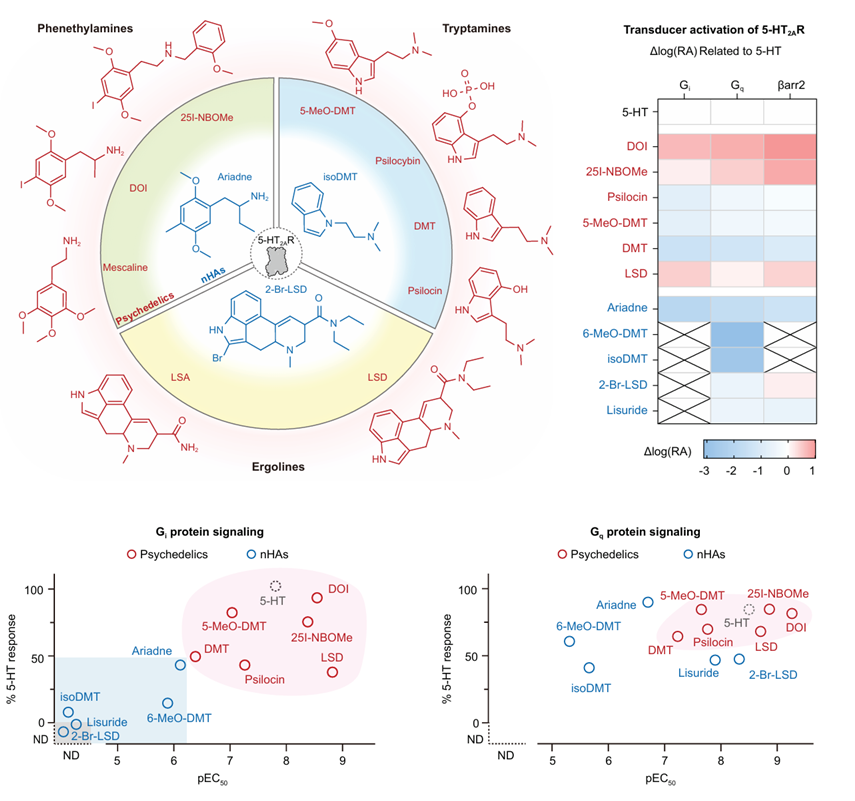
Figure 1. Pharmacological profiles of psychedelics and non-hallucinogenic analogues targeting the 5-HT₂ₐ receptor.
For a long time, classic psychedelics such as lysergic acid diethylamide (LSD) and psilocybin have attracted considerable attention due to the contradiction between their significant psychoactivity and therapeutic potential. Although clinical studies have demonstrated remarkable efficacy of these substances in treating major depressive disorder, treatment-resistant depression, and anxiety-related disorders, their intense hallucinogenic side effects remain the primary obstacle to clinical translation. Traditional theories have attributed hallucinogenesis primarily to excessive activation of the Gq signaling pathway following 5-HT₂ₐ receptor activation; however, this view cannot fully explain the complex pharmacological properties. This study, by integrating multi-dimensional signaling pathway analysis with cutting-edge structural biology techniques, successfully revealed a new mechanism underlying the action of classic psychedelics.
The research team systematically characterized the downstream signaling cascades triggered upon 5-HT₂ₐ receptor activation (Figure 1), and for the first time confirmed the key function of the Gi signaling pathway in the action of psychedelics, overturning conventional understanding. Using single-particle cryo-electron microscopy (cryo-EM), the team successfully resolved high-resolution structures of five different ligand-receptor-G protein complexes, including DOI- and psilocin-bound 5-HT₂ₐR-Gi complexes, as well as DOI-, arriadne-, and DOI-NBOMe-bound 5-HT₂ₐR-Gq complexes. These detailed structures revealed that ligand-specific receptor conformations are the key determinants of G protein selectivity, much like how different tooth patterns on a key open different locks.
Based on this molecular mechanism, the research team, through rational drug design, successfully developed a novel 5-HT₂ₐR-selective Gq-biased agonist DOI-NBOMe (Figure 2). In preclinical models, DOI-NBOMe exhibited anxiolytic-like and antidepressant-like effects without inducing hallucinogenic-like responses (Figure 3), achieving effective separation of therapeutic benefits from hallucinogenic side effects of psychedelics. This compound has been jointly patented by CIAC and Sichuan University (Patent No. CN120204186A). This study not only provides a new theoretical framework for understanding the mechanism of action of psychedelics but also establishes a new paradigm for precision drug design based on receptor signaling bias, laying a solid foundation for developing a new generation of non-hallucinogenic therapeutics for psychiatric disorders.
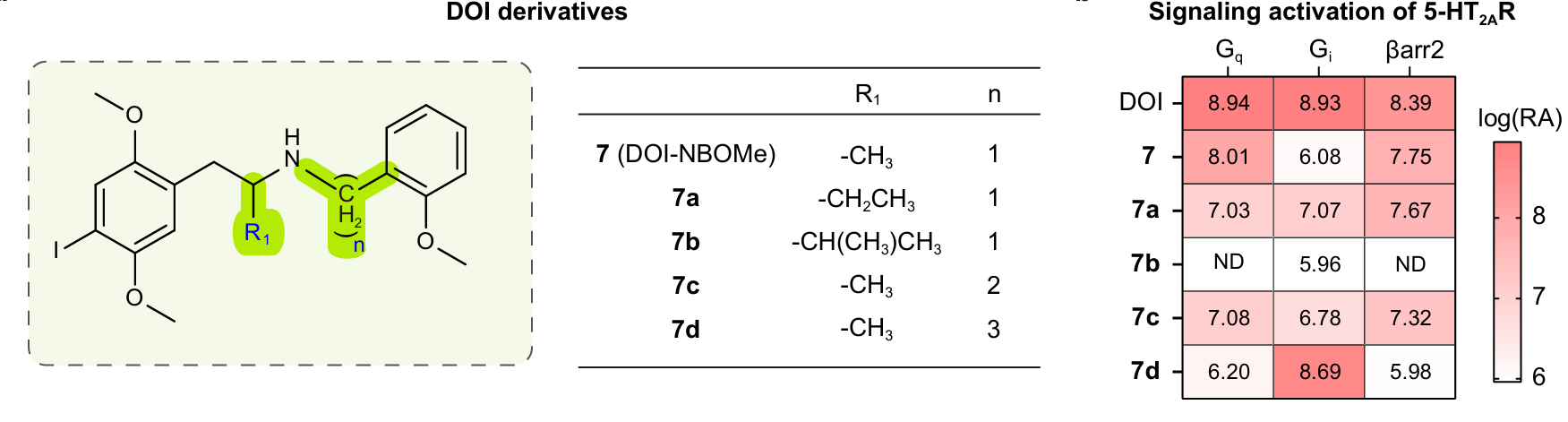
Figure 2. Structure-based design of novel 5-HT₂ₐR-Gq-biased agonists.
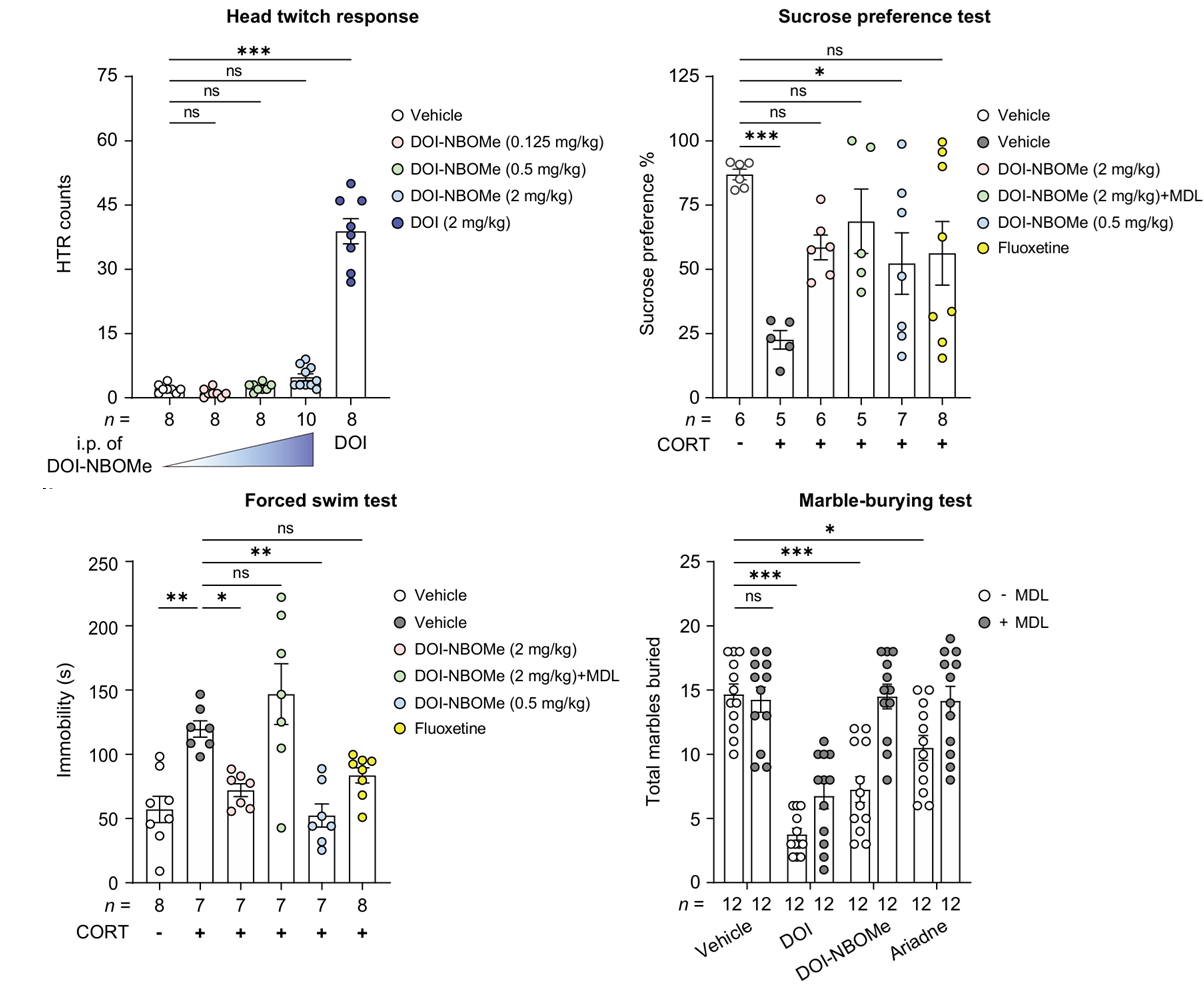
Figure 3. The Gq-biased agonist DOI-NBOMe exhibits anxiolytic-like and antidepressant-like effects in animal models without detectable hallucinogenic-like responses.
CIAC is a leading force in domestic psychedelic research. In recent years, the team led by Researcher Wang Xiaohui has conducted systematic research on structural modification, receptor pharmacology, brain circuit mechanisms, and preclinical translation of psychedelics, publishing more than thirty related papers in high-level journals including Nature, National Science Review, Molecular Psychiatry, and Brain, generating broad international impact. The research results are published in Nature: https://www.nature.com/articles/s41586-025-10061-7


 Address: No. 5625 Renmin Street Changchun City Jilin Province P.R. China
 Tel: 86-0431-85687300