
Introduction
Changchun Institute of Applied Chemistry, Chinese Academy of Sciences (CIAC) was founded on December 1, 1948, on the ruins of the former "Continental Academy of Sciences of Manchukuo", initially named "Northeast Industrial Research Institute." After several changes in affiliation and name, it was officially named "Changchun Institute of Applied Chemistry, Chinese Academy of Sciences" in December 1978. Through the relentless efforts of generations of CIAC scientists, the institute has developed into a comprehensive chemistry research institution integrating basic research, applied research, high-tech research, and industrialization, enjoying prestigious reputation and influence both domestically and internationally. It stands as a vital force and innovation hub in China's chemistry community.
Over the past seven decades, CIAC has upheld the banner of "Developing Applied Chemistry, Contributing to the Nation and Its People," achieving more than 1,200 scientific and technological accomplishments. These include over 450 major breakthroughs such as nickel-based butadiene rubber, solid rocket propellants, rare earth extraction and separation, and polymer heat-shrinkable materials. CIAC has created more than 100 "Firsts in China," making significant innovative contributions to the nation's economic development, national security, and sustainable social progress. The institute has received over 60 National Natural Science, Invention, and Science and Technology Progress Awards, and more than 400 CAS and provincial/ministerial-level achievement awards. It has filed over 4,400 domestic and international patent applications with more than 2,800 granted; published over 20,000 scientific papers as the first affiliation (of which over 15,000 are indexed by SCI). The number of patent applications, grants, and SCI-indexed citations has consistently ranked among the top five national research institutions. CIAC also nurtured the first domestically listed company within the CAS system — Changchun Heat-Shrinkable Materials Co., Ltd.
The main research fields of CIAC encompass polymer materials, rare earth materials, and electrochemical analytical instruments. In the field of polymer materials, the institute has established seven major research directions: high-end polyolefins, environmentally benign polymer materials, printing and optoelectronic materials, biomedical polymer materials, multilayer composite materials, polymer materials for extreme conditions, synthetic rubber and aviation tires. In the field of rare earth materials, three major research directions are laid out: rare earth high-energy power sources, high-strength and high-toughness rare earth magnesium alloys, and rare earth luminescent materials. In the field of electrochemical analytical instruments, four major research directions are established: intelligent electroanalytical instruments, key materials for hydrogen energy, electrochemical energy condition analysis, and real-time monitoring of neural signals. Additionally, the institute has cultivated three emerging research directions: visually transparent infrared materials, intelligent creation of polymer materials, and organic polymer separation membranes.
CIAC has established seven national-level and provincial-level laboratories or innovation platforms. These include: the State Key Laboratory of Polymer Physics and Chemistry, the Polymer Materials Engineering Laboratory (under preparation), the Laboratory of Polymer Materials for Extreme Conditions (under preparation), the Key Laboratory of Rare Earth Resource Utilization (the "Belt and Road" Joint Laboratory for Advanced Materials and Manufacturing), the Key Laboratory of Electroanalytical Chemistry, the Jilin Provincial Comprehensive Research Institute of Hydrogen Energy Industry, and the Chemical Frontier Interdisciplinary Laboratory (under preparation). Additionally, there are two national-level analytical and testing centers: the National Electrochemistry and Spectroscopy Research and Analysis Center, and the Changchun Mass Spectrometry Center; as well as the Jilin Provincial Major Science and Technology Innovation Base for Chemical New Materials.
CIAC is acclaimed as the "Cradle of Applied Chemistry in China." Since its founding, the institute has systematically dispatched over 1,200 specialized professionals to more than 30 emerging research institutions and enterprises. A total of 33 outstanding scientists who worked or studied at CIAC have been elected as Academicians of the Chinese Academy of Sciences, the Chinese Academy of Engineering, and the Academy of Sciences for the Developing World. As of the end of 2025, CIAC has 876 employees on duty, including 6 academicians of the Chinese Academy of Sciences, 3 fellows of The World Academy of Sciences, 157 senior professional researchers, 8 recipients of the National Hundred-Thousand-Ten Thousand Talents Program, and 28 recipients of the National Science Fund for Distinguished Young Scholars.
CIAC is one of the first institutions authorized by the State Council Academic Degrees Committee to train master's and doctoral students and establish postdoctoral research stations. It is also among the first batch of CAS key doctoral training bases. The institute currently offers doctoral and master's degree programs in two first-level disciplines: Chemistry and Chemical Engineering and Technology. As of the end of 2025, CIAC has 139 doctoral supervisors and 1,308 enrolled graduate students, of whom 691 are doctoral candidates (approximately 53%). An integrated doctoral/master's degree training system combining "Chemistry" and "Chemical Engineering and Technology" has been established. Graduate education management falls under the University of Science and Technology of China (USTC).
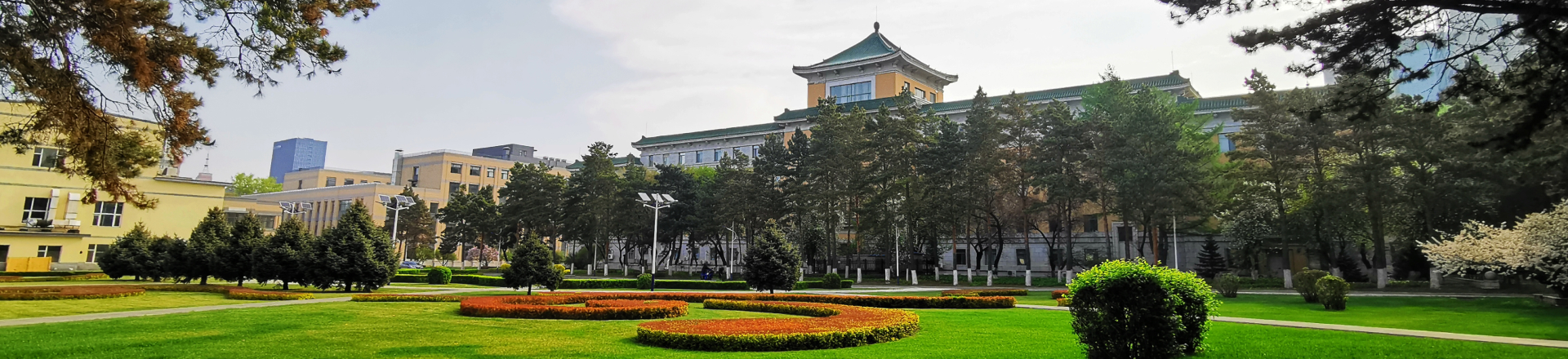
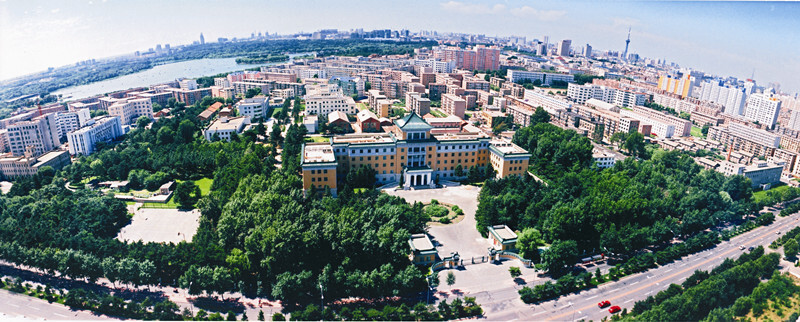
CIAC currently operates two campus sites. The Nanhu (South Lake) Campus covers a land area of 162,000 square meters with a construction area of approximately 126,000 square meters. The Beihu (North Lake) Campus (under construction) covers a land area of 166,000 square meters, with the first phase planned for a total construction area of 175,000 square meters. The institute is equipped with a range of advanced instrumentation, with equipment in key research areas reaching internationally advanced levels.
CIAC is responsible for the editorial and publication of several academic journals, including Chinese Journal of Analytical Chemistry, Chinese Journal of Applied Chemistry, Polymer Science (English edition), Advanced Sensor and Energy Materials, and the online English edition of Chinese Journal of Analytical Chemistry.

 Address: No. 5625 Renmin Street Changchun City Jilin Province P.R. China
 Tel: 86-0431-85687300