


Research Progress
CIAC Achieves Breakthrough in Rapid Antidepressant Drug Development
The Changchun Institute of Applied Chemistry (CIAC), Chinese Academy of Sciences, has achieved a significant breakthrough in rapid-acting antidepressant drug development. The research team led by Researcher Wang Xiaohui, in collaboration with the team of Professor Luo Minmin from the Beijing Institute for Brain Science and Brain-Inspired Research (Center), has elucidated the key antidepressant mechanism of ketamine and identified rapid-acting antidepressant candidate compounds with improved efficacy and reduced side effects. The findings were published online on November 5, 2025 (Beijing time: November 6) in the top international academic journal Nature, under the title "Adenosine signalling drives antidepressant actions of ketamine and ECT."
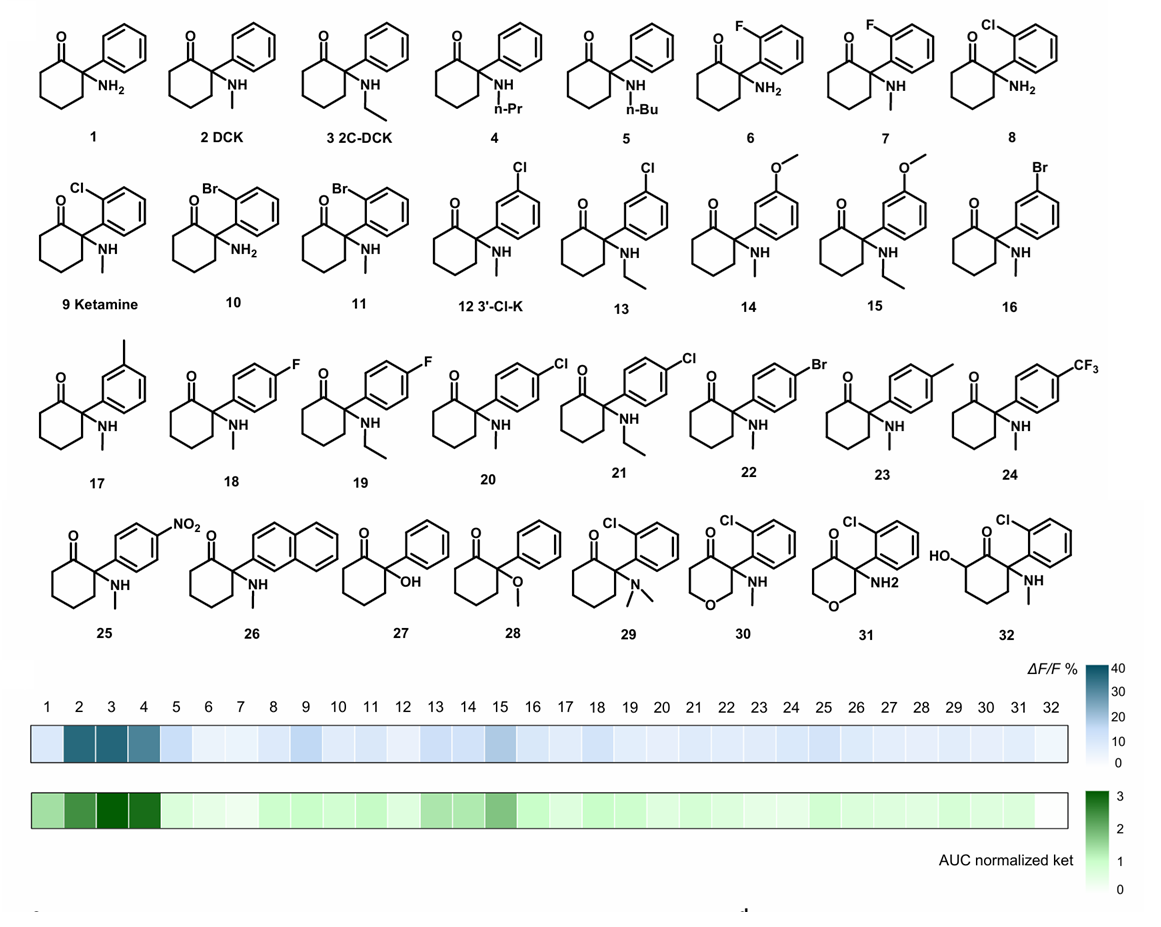
Figure 1. Structure-activity study of ketamine and its derivatives.
For a long time, the antidepressant mechanism of ketamine has been interpreted within the theoretical framework of NMDA receptor antagonism — that is, by blocking NMDA receptors to trigger downstream glutamatergic synaptic potentiation and neural plasticity remodeling. However, as clinical and preclinical evidence has continued to accumulate, this classic paradigm centered on "cell membrane receptors" has gradually revealed limitations in its explanatory power. Notably, as a class of typical psychoactive substances, ketamine, after crossing the blood-brain barrier into the central nervous system, not only acts on various membrane protein targets but also necessarily distributes widely throughout the intracellular environment. The research team discovered that ketamine directly modulates cellular energy metabolism to increase intracellular adenosine levels, and that adenosine signaling in the medial prefrontal cortex is the key messenger mediating ketamine's rapid antidepressant effect.
Using "enhanced adenosine release" as the phenotypic screening indicator, the researchers designed and screened a series of ketamine derivatives, systematically modifying the ketamine structure with a focus on the aromatic ring chlorine substituents, the sixth position of the cyclohexanone ring, and the amino side chain (Figure 1). Among these, norketamine induced significantly stronger adenosine release at equivalent doses compared to ketamine. Norketamine, at very low doses, elicited stronger and more sustained adenosine signaling and demonstrated superior antidepressant efficacy in behavioral tests compared to ketamine (Figure 2), while its associated locomotor hyperactivity side effects were significantly reduced. Importantly, a clear decoupling was observed between adenosine release capacity and NMDA receptor inhibitory effects, suggesting that ketamine's antidepressant action does not rely entirely on the NMDA receptor blockade mechanism.
Figure 2. Validation of adenosine activity and antidepressant effects of the ketamine derivative norketamine.
Publication:Nature
DOI: https://www.nature.com/articles/s41586-025-09755-9
Title: Adenosine signalling drives antidepressant actions of ketamine and ECT


 Address: No. 5625 Renmin Street Changchun City Jilin Province P.R. China
 Tel: 86-0431-85687300