


Research Progress
Significant Progress in Bifunctional Catalyst for Synthesizing High Molecular Weight Polyesters
The Changchun Institute of Applied Chemistry, Chinese Academy of Sciences (CIAC, CAS) has achieved significant progress in the controllable synthesis of high molecular weight polyester materials using bifunctional Schiff base iron catalysts. The team led by Academician Chen Xuesi and Researcher Pang Xuan successfully developed an electronic-effect-modulated bifunctional iron catalyst that achieves efficient controllable polymerization under extremely low loading conditions, successfully synthesizing a series of high molecular weight polyesters, providing new research ideas for the synthesis of high molecular weight polyester materials. The related research results were published in the prestigious international chemistry journal Angewandte Chemie International Edition under the title "Electronic-Effect-Guided Bifunctional Iron Catalyst for the Copolymerization of Epoxides and Anhydrides: Enabling the Synthesis of High Molecular Weight Polyesters."
Polyesters, containing easily hydrolyzable ester bond structures and exhibiting ideal monomer-polymerization equilibrium, demonstrate potential for degradability and chemical recycling, making them ideal alternatives to non-degradable polyolefins. The ring-opening copolymerization of epoxidized bulk olefin raw materials with inexpensive cyclic anhydrides represents one of the cost-effective and performance-tunable polyester synthesis approaches. However, this approach is currently limited by relatively low molecular weights, resulting in limited material performance that constrains further applications. Therefore, improving the molecular weight of polyesters through rational catalyst design to subsequently enhance polyester performance has been a highly关注的 research hotspot in academia. Among various catalytic systems, Schiff base catalysts have attracted considerable attention due to their high activity, tunable structure, and ease of synthesis. In particular, iron, with its low toxicity and good biocompatibility, perfectly aligns with the green synthesis concept for degradable polymers. However, compared to traditional Schiff base metal catalysts, Schiff base iron catalysts still face dual challenges of catalytic activity and controllability in ring-opening copolymerization.
To address these challenges, the research team proposed a novel catalyst design strategy based on electronic effect modulation, redesigning and synthesizing a new class of bifunctional Schiff base iron catalysts. By introducing specific co-catalysts, they precisely modulated the electron density of the iron metal center. This optimization of electron density effectively enhanced the catalytic activity. More critically, this catalytic system maintained excellent catalytic activity and polymerization controllability even under extremely low loading conditions, effectively avoiding the activity decline and side reactions caused by reduced catalyst usage. Based on this catalyst, the team successfully synthesized a series of high molecular weight polyesters with comprehensive properties superior to similar materials, demonstrating excellent application prospects. Additionally, the catalyst could be used directly with unpurified commercial monomers in air atmosphere for polymerization, validating its impurity tolerance and practical application potential under non-ideal conditions.
This study, through the electronic effect modulation design strategy, successfully developed a new class of bifunctional Schiff base iron catalysts that not only achieved efficient controllable copolymerization of epoxides and anhydrides at extremely low loading, synthesizing high-performance high molecular weight polyesters, but also demonstrated excellent impurity tolerance and practical application potential. This work provides an effective means to overcome the molecular weight bottleneck of polyester materials and opens new avenues for designing next-generation high-performance catalysts.
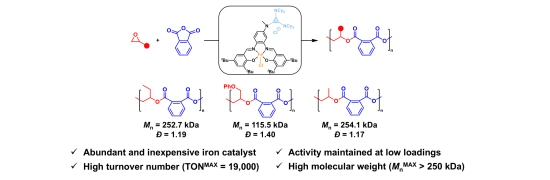
Figure 1. Bifunctional iron catalyst-catalyzed synthesis of high molecular weight polyester materials.
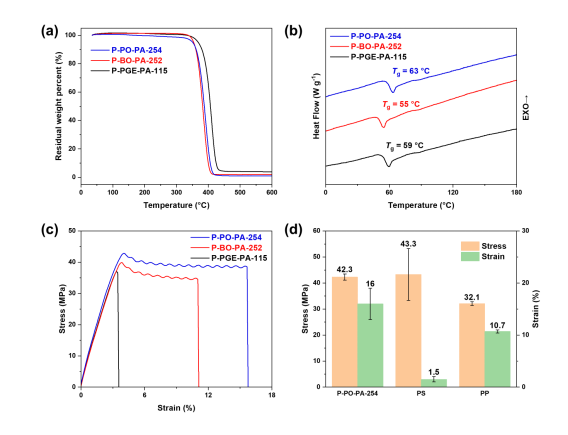
Figure 2. Performance characterization and comparison of high molecular weight polyesters synthesized in this study.
The research results are published in Angewandte Chemie International Edition:
https://onlinelibrary.wiley.com/doi/10.1002/anie.4437375


 Address: No. 5625 Renmin Street Changchun City Jilin Province P.R. China
 Tel: 86-0431-85687300