


Research Progress
Significant Progress in Ultrasound-Triggered Deep Tumor Penetration of Nanodrugs
The Changchun Institute of Applied Chemistry, Chinese Academy of Sciences (CIAC, CAS) has achieved significant progress in utilizing ultrasound-triggered charge reversal of nanodrugs to enhance deep penetration in solid tumors. The research team for the first time revealed the ultrasound-responsive cleavage mechanism of coumarin-derived carbamate bonds and innovatively applied this structure to construct an ultrasound-remotely controllable charge-reversal nanodelivery system. Under low-intensity ultrasound, the system undergoes rapid charge flipping, activating a Golgi apparatus-dependent iterative transcytosis pathway, ultimately achieving deep penetration of nanodrugs in solid tumors and highly efficient, low-toxicity treatment (Figure 1). The related research results were published in ACS Nano under the title "Ultrasound-Triggered Charge-Reversal Nanoparticles via Golgi-Dependent Iterative Transcytosis for Enhanced Deep Tumor Penetration."
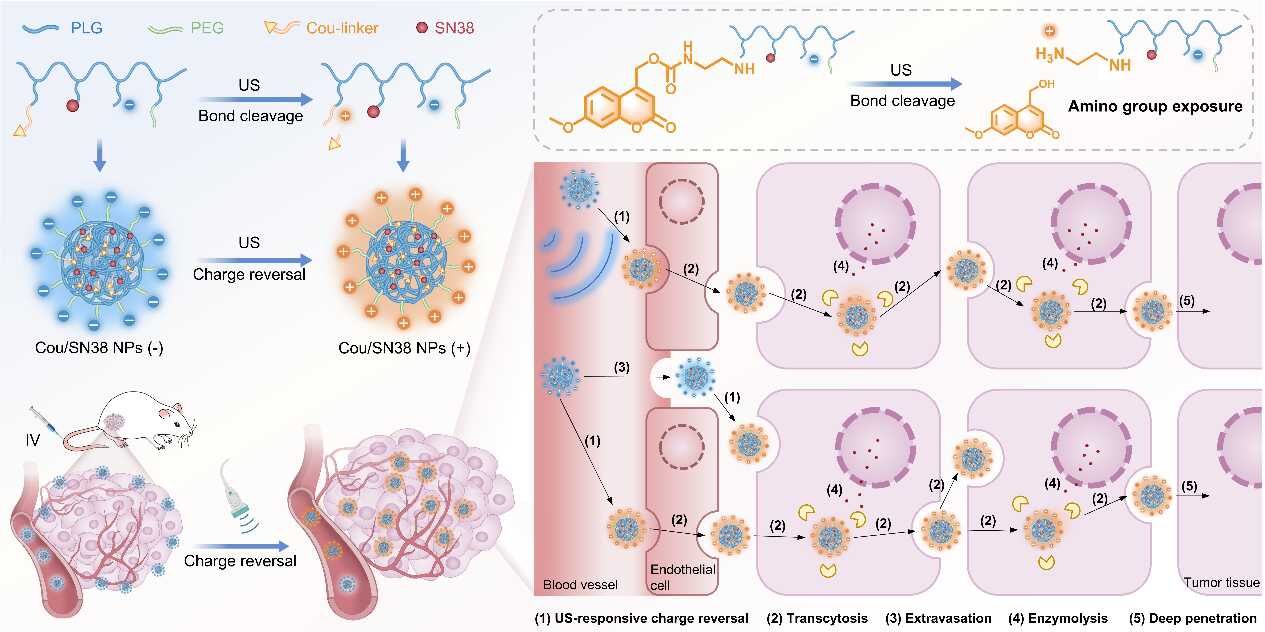
Figure 1. Schematic illustration of the working mechanism of ultrasound-triggered charge-reversal nanoparticles achieving deep tumor penetration through Golgi-dependent iterative transcytosis.
For a long time, the dense extracellular matrix and high interstitial fluid pressure within solid tumors have constituted the core barrier to nanodrug delivery to deep tumor regions, making it difficult for drugs to reach effective therapeutic concentrations in the tumor core. Traditional tumor microenvironment (pH, enzyme)-responsive charge reversal strategies are often limited by tumor heterogeneity and slow response kinetics, making uniform deep penetration difficult; while photo-responsive strategies, though rapid in response, are inherently limited by insufficient tissue penetration depth. Therefore, developing a new drug delivery strategy with both deep penetration capability and rapid spatiotemporal controllability has become a key scientific issue in this field.
To address these challenges, the team led by Academician Chen Xuesi and Researcher Tang Zhaohui developed a novel ultrasound-responsive chemical unit—coumarin-derived carbamate bonds—based on the non-invasive, deep-penetrating, and high spatiotemporal resolution characteristics of ultrasound. Theoretical calculations and experiments confirmed that under therapeutic-grade low-intensity ultrasound (1.5 W/cm², 1 MHz, 50% duty cycle), this chemical bond undergoes efficient cleavage and exposes protonatable primary amino groups, enabling rapid surface charge transformation (Figure 2). Building on this, the research team constructed ultrasound-triggered charge-reversal nanoparticles loaded with SN38 (Cou/SN38 NPs) using poly(glutamic acid) (PLG) as the backbone. This nano-system maintains a negative surface charge in physiological environments for prolonged circulation stability; after only minutes of ultrasound irradiation at the tumor site, it achieves complete surface potential reversal from negative to positive, demonstrating extremely high spatiotemporal controllability. Notably, the mildly acidic tumor microenvironment can further accelerate this charge reversal process, endowing the system with inherent tumor selectivity (Figure 3).
More importantly, the research team thoroughly elucidated the mechanism of cellular transport pathway transformation triggered by charge reversal. The study found that after ultrasound-triggered charge reversal, the primary cellular uptake pathway of nanoparticles shifted from macropinocytosis to caveolin-mediated endocytosis, and intracellular transport trajectories fundamentally changed, with positively charged nanoparticles preferentially being transported to the Golgi apparatus rather than lysosomes, successfully activating the Golgi-dependent iterative transcytosis process. This process enables efficient nanoparticle internalization by tumor cells, repackaging by the Golgi apparatus, re-extrusion, and repeated uptake by neighboring tumor cells, achieving relay transmission of drugs within tumor tissue. In systematic evaluation using the 4T1 mouse breast cancer model, this strategy demonstrated exceptional anti-tumor efficacy. At the in vivo animal level, after intravenous injection of Cou/SN38 NPs combined with local ultrasound irradiation at the tumor site, drug accumulation in deep tumor regions significantly increased, ultimately achieving a tumor growth inhibition rate as high as 93%, with no obvious systemic toxic side effects observed, and complete tumor cure achieved in some mice (Figure 4).
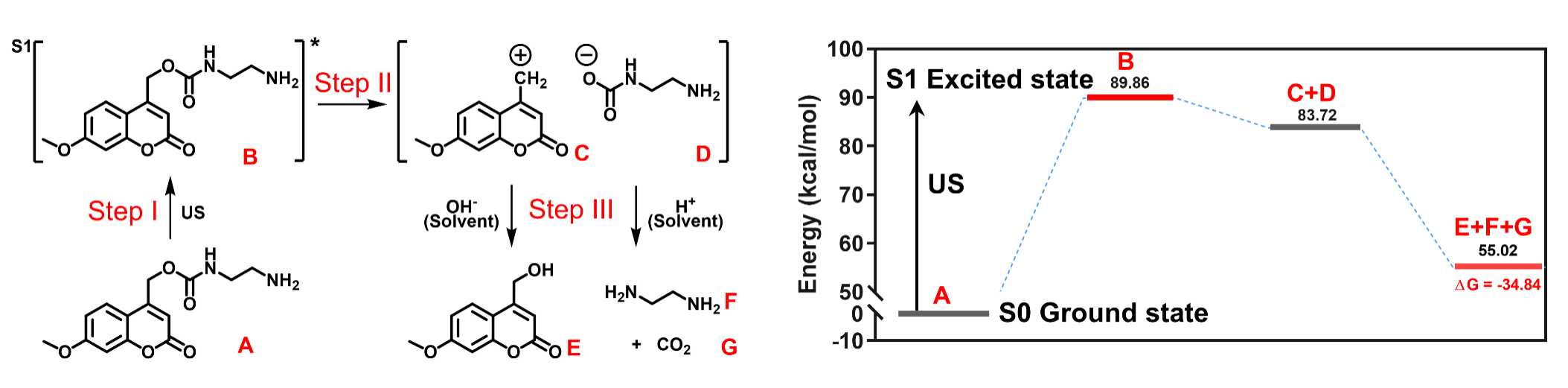
Figure 2. Ultrasound cleavage mechanism of coumarin-derived carbamate bonds.
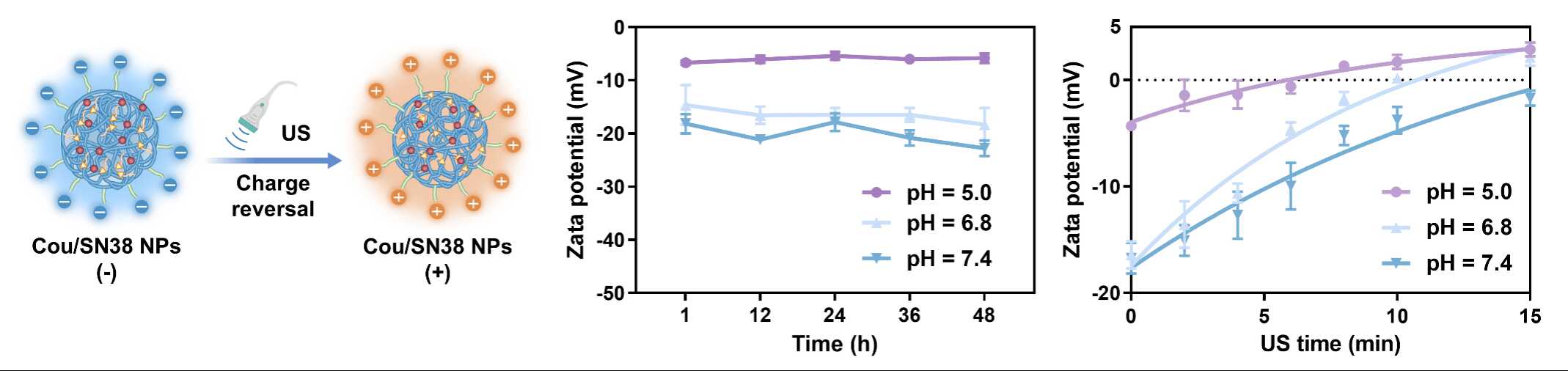
Figure 3. Precise charge regulation of ultrasound-triggered charge-reversal nanoparticles Cou/SN38 NPs.
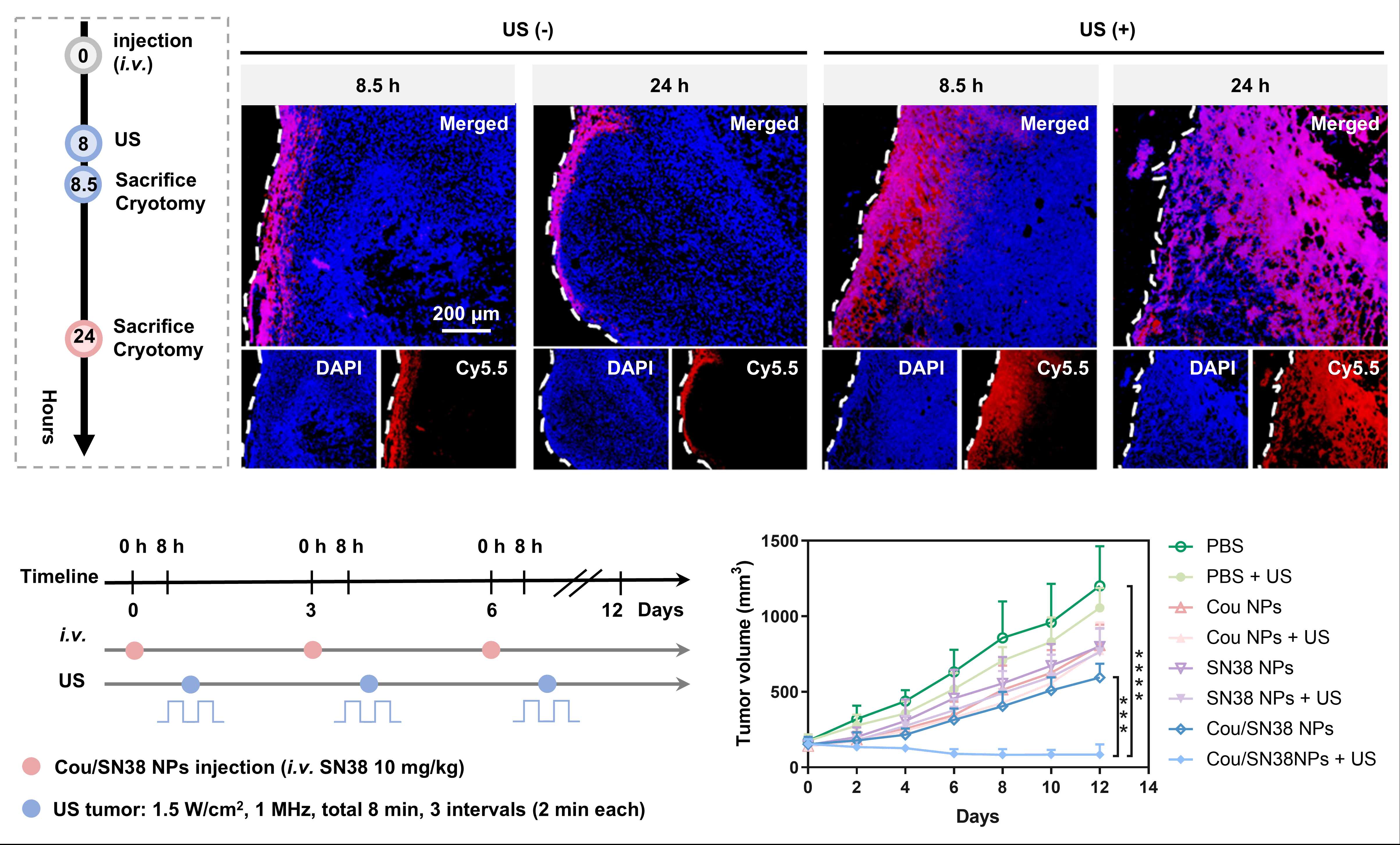
Figure 4. Deep penetration and significant tumor suppression effect of ultrasound-triggered charge-reversal nanoparticles Cou/SN38 NPs in solid tumors.
The innovation of this study lies in applying a novel ultrasound-responsive chemical reaction to the charge reversal design of nanodrugs. Compared to traditional strategies, it offers the advantages of fast response speed, strong tissue penetration capability, and high spatiotemporal controllability, providing a completely new approach to overcoming the tumor penetration challenge for nanodrugs and demonstrating the broad application prospects of ultrasound-responsive chemistry in precision tumor therapy.
The research results are published in ACS Nano:
https://doi.org/10.1021/acsnano.5c14557


 Address: No. 5625 Renmin Street Changchun City Jilin Province P.R. China
 Tel: 86-0431-85687300