


Research Progress
Significant Progress in High-Density Heteronuclear Dual-Atom Nanozymes for Tumor Metabolic-Immune Regulation
The Changchun Institute of Applied Chemistry, Chinese Academy of Sciences (CIAC, CAS) has achieved significant progress in the construction of high-density heteronuclear dual-atom nanozymes and tumor metabolic-immune regulation. The research team led by Academician Zhang Hongjie and Researcher Wang Yinghui successfully developed a high-density heteronuclear Fe/Co dual-atom nanozyme platform that can be used for anti-tumor immunotherapy through the induction of disulfidptosis and ferroptosis. The nanozyme is loaded with high-density Fe/Co bimetallic active centers (Fe and Co mass fractions reaching 10.35 wt% and 11.32 wt%, respectively), possessing excellent flavin reductase-like and peroxidase-like activities that efficiently catalyze biothiol oxidation and disrupt tumor cell redox homeostasis. The related research results were published in the prestigious international chemistry journal Angewandte Chemie International Edition under the title "Charge-Tunable Dense Dual-Atom Nanozymes Reprogram Biothiol Metabolism Through Multi-Enzyme-Mimetic Catalysis to Synergistically Induce Ferroptosis and Disulfidptosis."
Biothiols play critical roles in maintaining cellular redox homeostasis, regulating programmed cell death pathways, and modulating immune responses. Therefore, reprogramming biothiol metabolism in tumor cells represents a highly promising strategy for enhancing anti-tumor immunity. High-density heteronuclear dual-atom nanozymes, with their asymmetric electron distribution, atomic-level synergistic effects, and ultra-high active site density, have recently emerged as an effective means to overcome the inherent limitations of traditional single-atom nanozymes, providing new opportunities for efficient regulation of biothiol metabolism.
Based on this concept, the research team designed and prepared a natural polyphenol phloridzin-modified high-density iron-cobalt dual-atom nanozyme platform (FeCo DDA/P). The high-density iron-cobalt dual-atomic catalytic sites with optimized electronic structure endowed FeCo DDA with excellent peroxidase-like (POD), L-cysteine oxidase-like (LCO), glutathione oxidase-like (GSHOx), and NADPH oxidase-like (NOx) activities. FeCo DDA/P can not only efficiently generate reactive oxygen species, consume glutathione, and generate endogenous hydrogen peroxide through intrinsic multi-enzyme activity to amplify oxidative stress within tumor cells, inducing immunogenic ferroptosis; but also block the glycolysis process, directly oxidize L-cysteine, and disrupt the NADP⁺/NADPH redox balance, leading to cystine accumulation and initiation of disulfidptosis. The cascaded enhanced ferroptosis and disulfidptosis induced by FeCo DDA/P further stimulated dendritic cell maturation, reversed the immunosuppressive tumor microenvironment, thereby increasing T cell infiltration and activating systemic anti-tumor immunity. In summary, FeCo DDA/P can effectively disrupt redox homeostasis and reprogram biothiol metabolism, thereby triggering both disulfidptosis and ferroptosis, achieving the dual effect of efficient tumor suppression and potent immune activation (Figure 1).
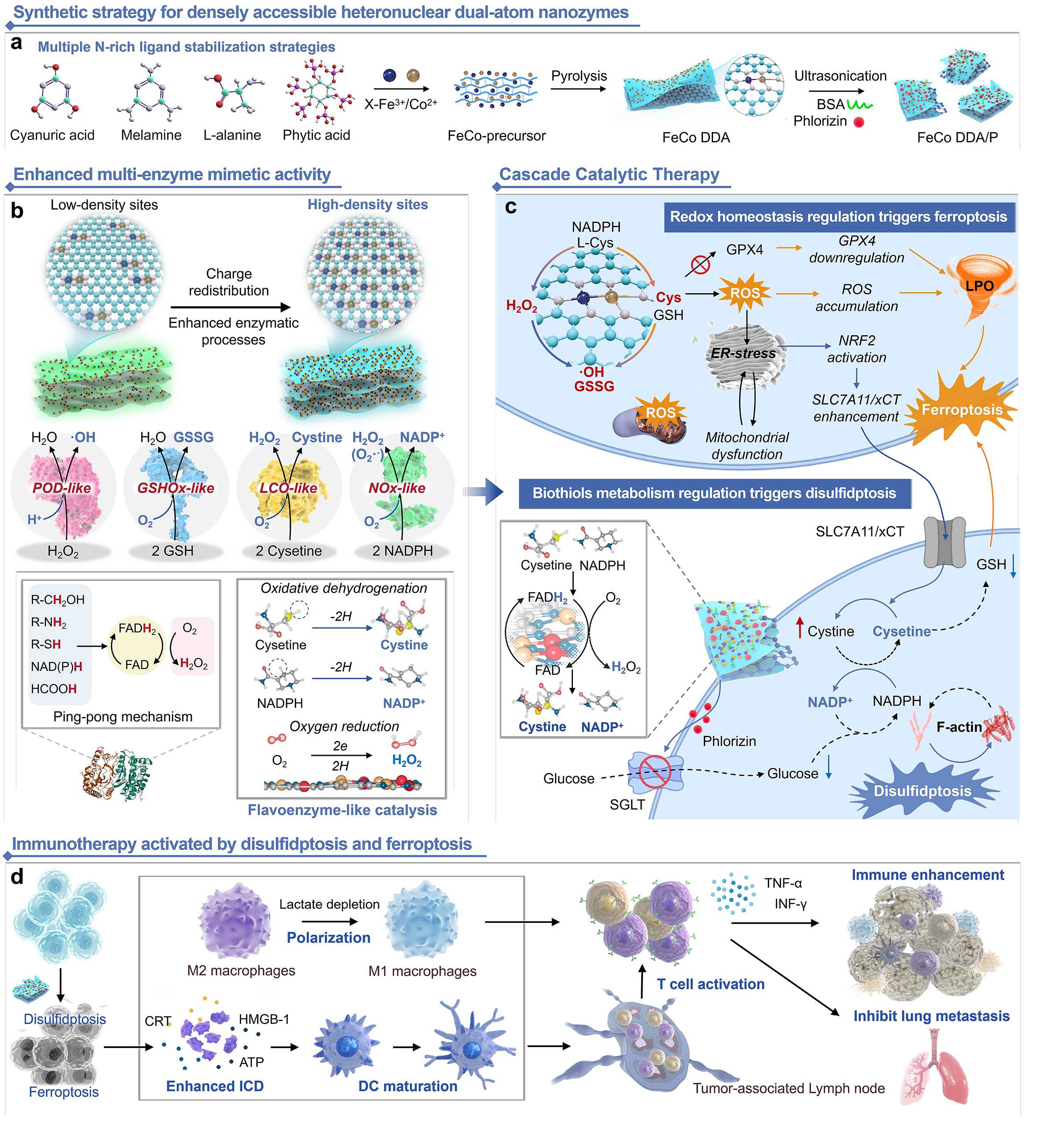
Figure 1. Schematic illustration of the preparation and therapeutic mechanism of FeCo DDA/P.
This study prepared dual-atom nanozymes loaded with high-density Fe/Co atom pairs through an "in situ polycondensation and confined carbonization" strategy, providing not only a new strategy for atomic-level design of multifunctional nanozymes but also establishing a theoretical framework for utilizing ferroptosis and disulfidptosis as synergistic immune regulation mechanisms in precision tumor therapy.
The research results are published in Angewandte Chemie International Edition:
https://doi.org/10.1002/anie.202524634


 Address: No. 5625 Renmin Street Changchun City Jilin Province P.R. China
 Tel: 86-0431-85687300