

Research Progress
Significant Progress in Lattice Oxygen Regeneration Kinetics Optimization and Stable Catalysis for Alkaline Oxygen Evolution Reaction
The Changchun Institute of Applied Chemistry, Chinese Academy of Sciences (CIAC, CAS) has achieved significant progress in lattice oxygen regeneration kinetics optimization and stable catalysis for the alkaline oxygen evolution reaction (OER). The team led by Researcher Zhu Jianbing and Researcher Xing Wei at CIAC, in collaboration with Professor Huang Bolong from City University of Hong Kong, proposed an interfacial hydrogen bond network engineering strategy. By chemically adsorbing oxygen-containing anions such as SO₄²⁻ on the NiFeOOH surface in situ, they reshaped the catalyst's interfacial hydrogen bond network structure, accelerated OH⁻ supply and lattice oxygen replenishment, and achieved enhanced catalyst stability under lattice oxygen mechanism (LOM)-dominated conditions. The related research results were published in the prestigious international journal Journal of the American Chemical Society under the title "Engineering Interfacial Hydrogen-Bond Networks to Accelerate Lattice Oxygen Regeneration for Stable Oxygen Evolution Catalysis."
Anion exchange membrane water electrolysis (AEMWE) is an important technology for low-cost green hydrogen production, but it is limited by the sluggish kinetics of the anode oxygen evolution reaction (OER). The lattice oxygen oxidation mechanism (LOM) of OER can bypass the linear scaling relationships inherent in the traditional adsorbate evolution mechanism, effectively reducing overpotential; however, it simultaneously generates oxygen vacancies during the reaction process. If these oxygen vacancies cannot be replenished in time, the catalyst is prone to structural degradation and active component dissolution, leading to decreased stability.
To address this issue, this study utilized SO₄²⁻ anchored on the NiFeOOH surface to regulate the hydrogen bond network: on one hand, restricting excessive accumulation of hydrated cations in the electrical double layer; on the other hand, constructing a continuous and flexible interfacial hydrogen bond network through oxygen-containing anions, strengthening OH⁻/proton migration, and promoting oxygen vacancy regeneration, thereby achieving enhanced catalyst stability. Isotope labeling, in situ spectroscopy, and theoretical calculations collectively demonstrated that this strategy significantly enhances LOM reaction activity, increases the OH⁻ diffusion coefficient by 25 times, and reduces the oxygen vacancy filling energy barrier from 0.93 eV to 0.42 eV. NiFeOOH@SO₄²⁻ operated at a high current density of 2.0 A cm⁻² in AEMWE for 2000 hours with a decay rate as low as 0.053 mV h⁻¹. This "interfacial anion regulation" strategy can be extended to other oxygen-containing anions and different metal substrates. Combined with higher spatiotemporal resolution in situ spectroscopy and theoretical simulations in the future, it is expected to enable coupled design of catalyst electronic structure and catalytic interfacial hydrogen bond networks, providing new directions for the development of long-lasting hydrogen electrocatalysts.
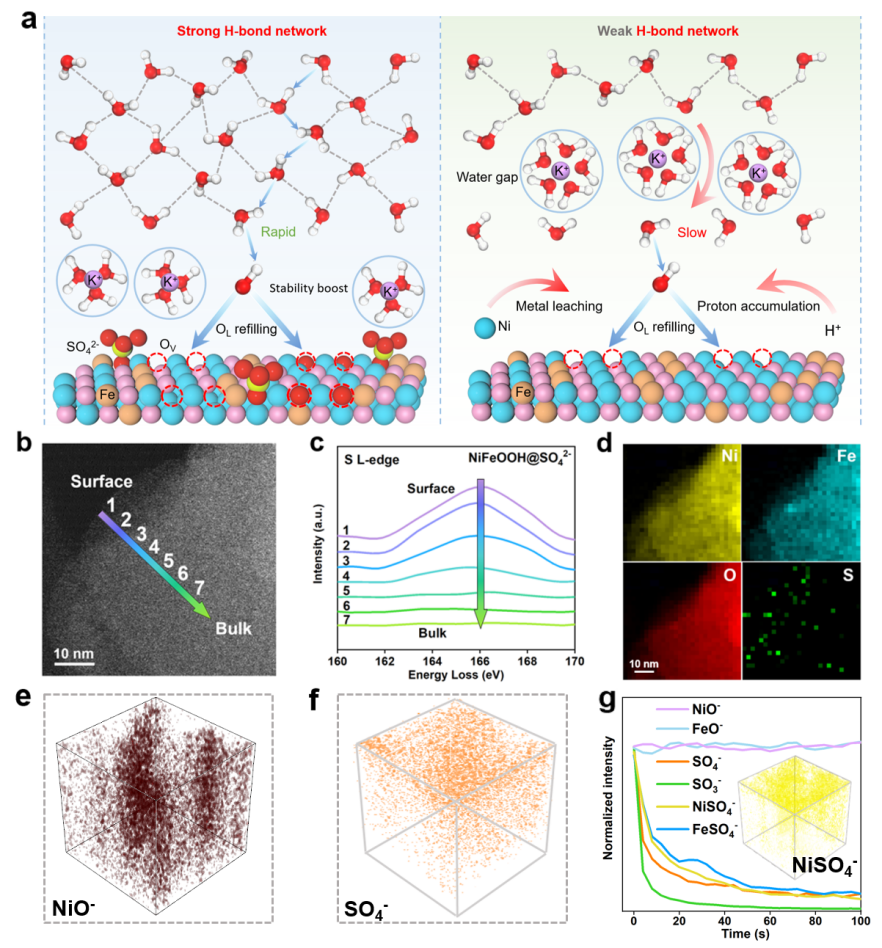
Figure 1. Schematic illustration of interfacial hydrogen bond network engineering.
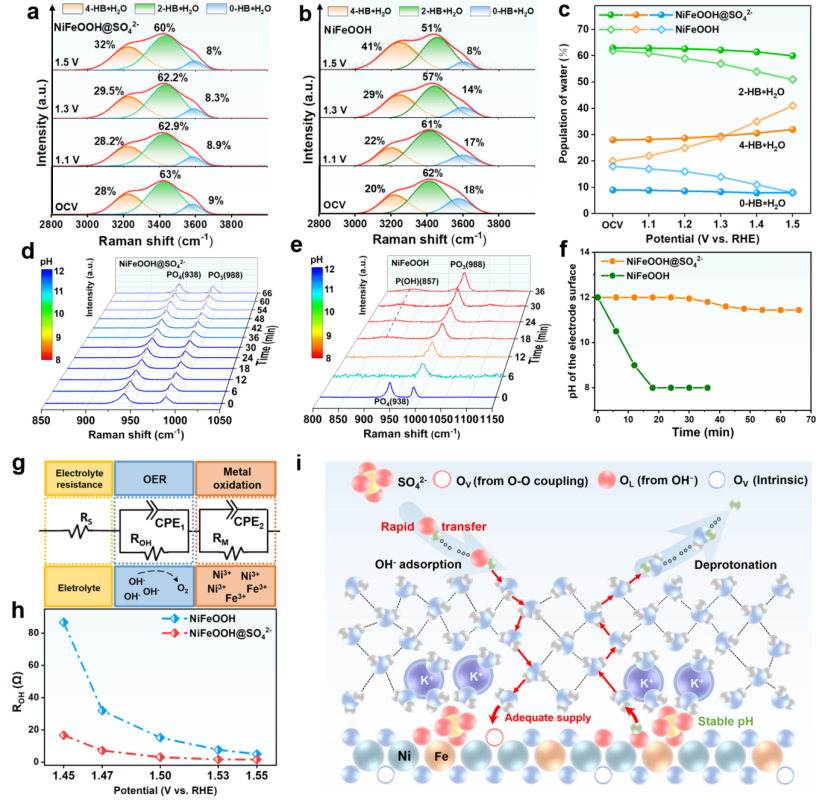
Figure 2. In situ analysis of interfacial water structure.
The research results are published in Journal of the American Chemical Society:
https://doi.org/10.1021/jacs.6c03222


 Address: No. 5625 Renmin Street Changchun City Jilin Province P.R. China
 Tel: 86-0431-85687300